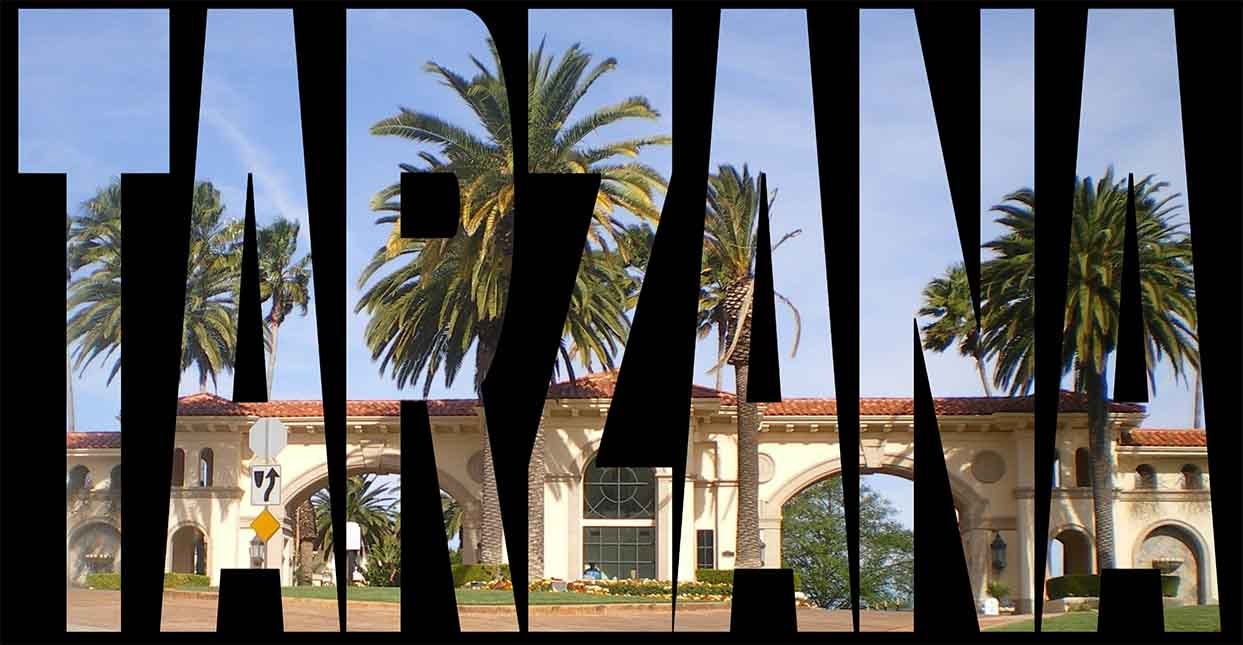
A few days ago, I was driving through Tarzana, a 9 square mile neighborhood located in Los Angeles’s beautiful San Fernando Valley. I enjoyed flawless weather, cute little shops, and, of course, the legendary Ventura Blvd. sushi joints. It’s quiet, safe, even kinda quaint, at least, for L.A. County.
But how did it get that dumb name?
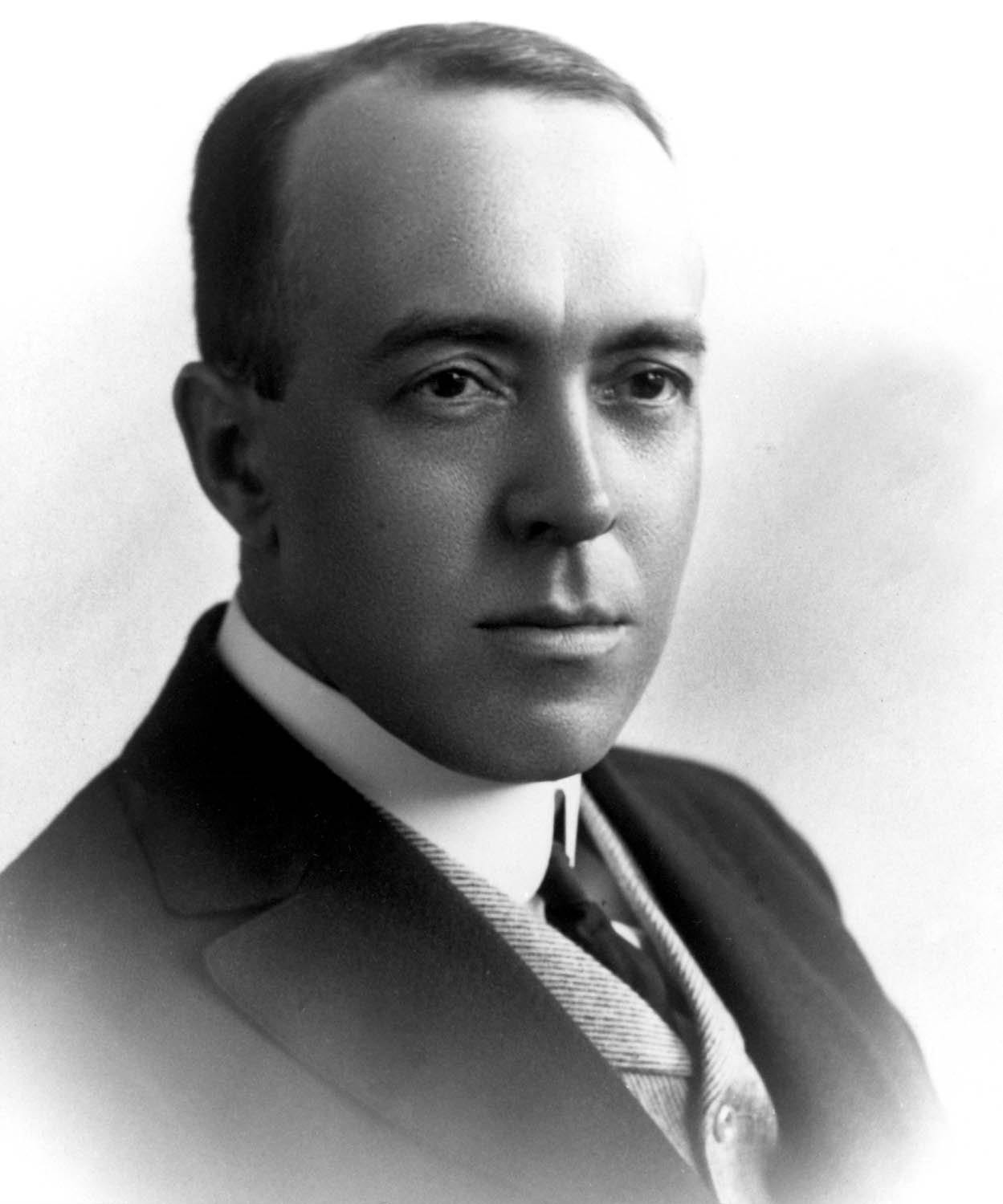
It turns out that Tarzana, the community, took its name from Tarzana Ranch, which was named by Edgar Rice Burroughs, the author most famous for creating Tarzan. Back in 1919, he bought the large tract of land just north of Los Angeles, and named it after his own literary creation.
Sounds expensive, doesn’t it? Well, it turns out Tarzan is one of the most successful fictional characters of all time. Like, we’re talking Harry Potter territory. He’s been in dozens of books and movies, syndicated comics, cartoons, comic books and games. So Burroughs had some money to spend.
In fact, Tarzan-the-cash-cow might be Burroughs’s actual genius. Early on in his writing career, friends and colleagues advised him not to sell the rights to his character. They told him not to put Tarzan in movies or comic books, but to protect him and keep him to himself. Burroughs ignored their warnings and was rewarded with a fortune.
That’s one of the reasons he was on my “to-read” list. Being wildly successful, he has this reputation as one of the great adventure novelists, often compared to people like Rudyard Kipling or Sir Arthur Conan Doyle. The only question was where to start? Burroughs was absurdly prolific, writing dozens and dozens of novels. Tarzan, his most enduring work, was maybe the most obvious point of entry, but I’m more of a sci-fi guy. So instead, I chose to start Burroughs’s Barsoom books - an 11-novel series taking place on Mars.
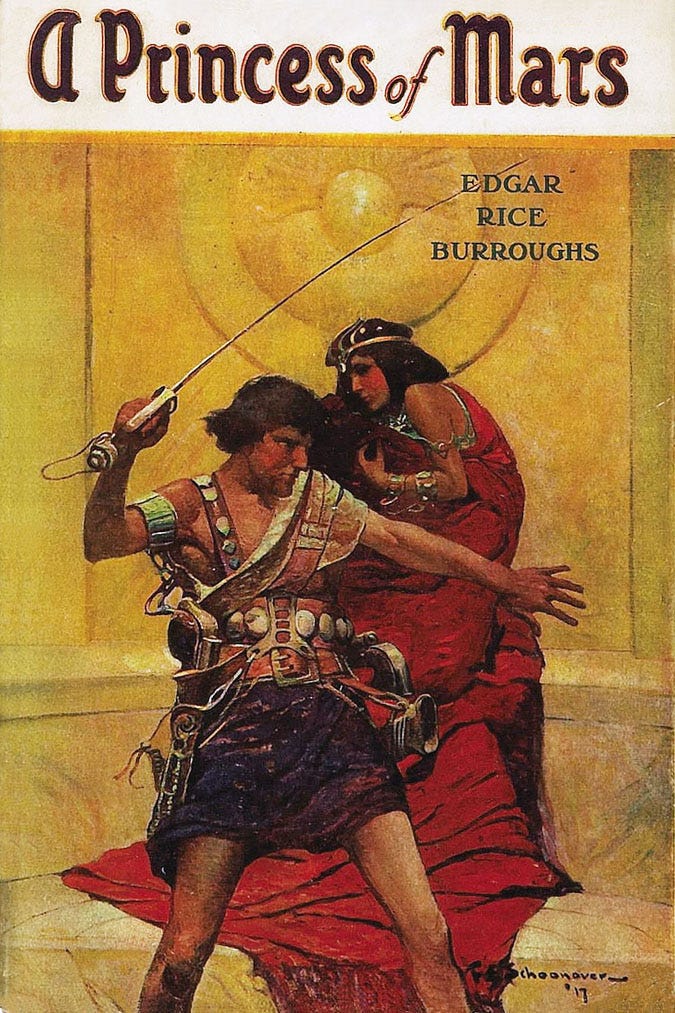
I was primed to enjoy the first book, A Princess of Mars, even more so, because the Barsoom novels were the basis for John Carter, one of the biggest box office bombs in Hollywood history. I thought I was going to read an overlooked classic, a book that was wronged by Philistines in the entertainment industry and eternally diminished by poor ticket sales. And boy... I was way off.
I fucking hated it.
Simply put, Arthur Conan Doyle wrote a better adventure. Full stop. Doyle had the ability to bring the reader along as he went from credible, authentic London (complete with real addresses!) to somewhere entirely alien and exciting. An opium den. A moorland swamp. A wagon train during America’s westward expansion. And like a magic trick, his characters take us to these wild and wonderful places so seamlessly that we carry that feeling of reality with us from the familiar to the fantastic.
Burroughs, by contrast, begins A Princess of Mars by having John Carter hide from some “savage” Apaches in a cave. Looking through the cave opening to the sky above, he sees the planet Mars, and then he’s magically there. That’s how he gets to Mars, astral projection during a cave nap. It’s dogshit.
From there, John Carter discovers a savage race of green giants known as the Thark. The Thark are fierce and warlike, with a tendency towards cruelty. However, they’re also governed by a strict code of conduct. So when John Carter eventually kills one of their chieftains, he inherits their rank, fortune, and “females.”
Huh…
If I had been enjoying the book, I might not have paused to do more research at this point. I’ve read racism and misogyny in classics before, obviously. Arthur Conan Doyle was certainly no stranger. I particularly remember his descriptions of the short thief in The Sign of the Four which are fairly unforgivable, no matter the times.
But there was something more going on here, something that felt too deliberate. After a few more chapters, and some more research, I felt that Burroughs was obsessed with class and hierarchy. So I did some more Googling and some more reading, and that’s when I discovered Edgar Rice Burroughs was a eugenicist.
Boooooooooo...
Even worse, further investigation revealed that Burroughs regularly incorporated eugenics into his work. Tarzan (which means “white skin” in the fictional language of the African apes who raised him) was a European of noble birth. As an adult, he easily surpasses the people around him both physically and intellectually. In the novels, at least. The “Me Tarzan, you Jane” style dialogue was an invention of Johnny Weissmuller, who played Tarzan in 12 films. Tarzan in the books wis actually something of an intellectual.
Why was Tarzan so superior to everyone around him? Well, because when your blood is WASP-y and slightly royal, you’re simply destined to turn out terrific. At least, that was Burroughs’s undisguised point of view.
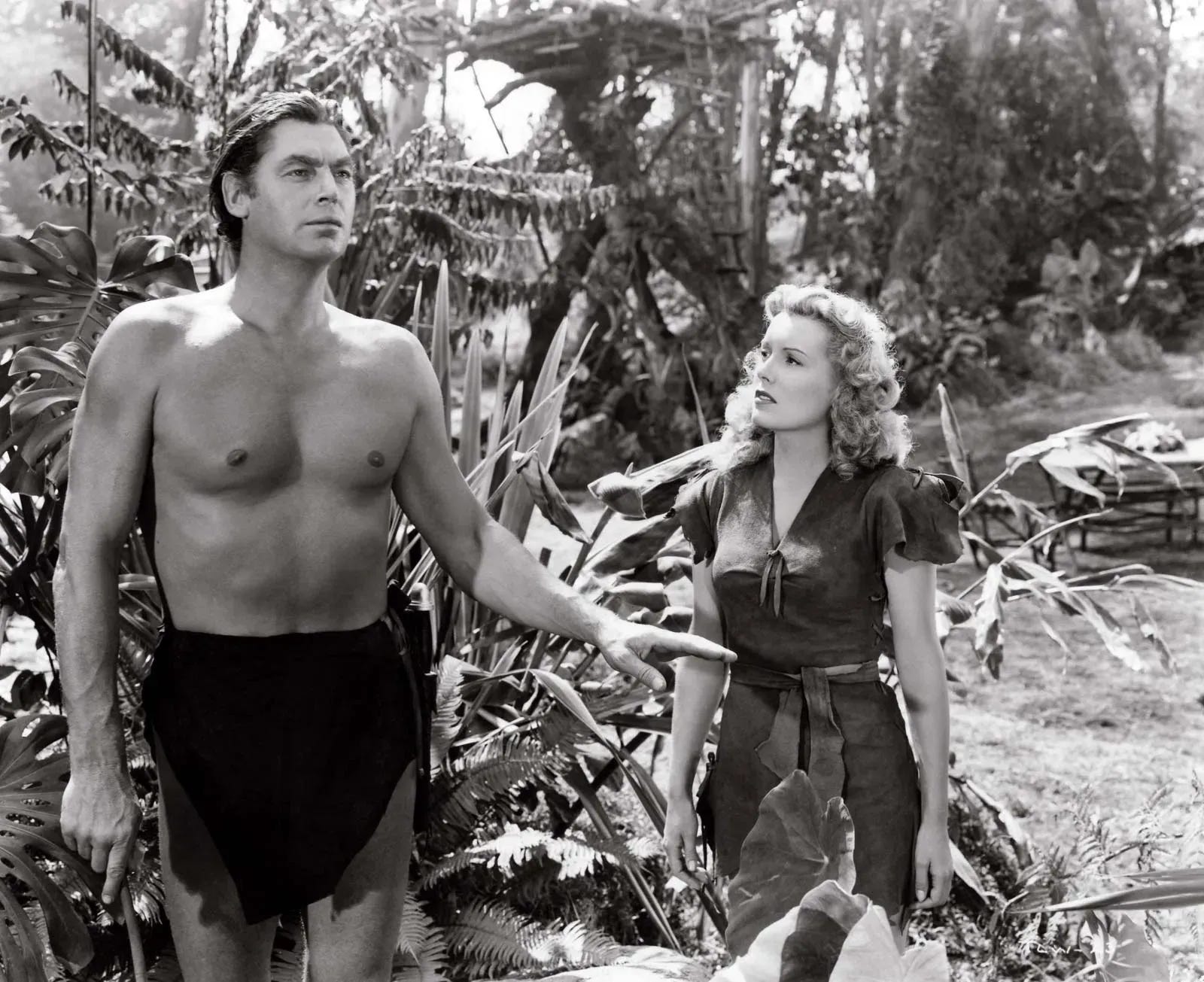
There’s also a Tarzan story where he discovers a civilization that has practiced eugenics for thousands of years. Burroughs presents the community as being free of all crime, because they have spent centuries killing not only the criminals, but their entire families to ensure the “criminality gene” would be eliminated. This is the kind of reasoning that makes sense to people whose only experience with crime is intellectual.
The Barsoom series addressed the subject of racial hierarchy more abstractly (once you got past the Apaches, at least). On Mars, Burroughs created fictional savages, and not just the Thark, but the Warhoon as well, another tribe of barbaric green warriors. It seems like he couldn’t get enough swarthy foils for his unblemished heroes.
I managed to finish the book, despite the sour taste in my mouth. The racism felt calculated. Intentional. Somehow worse than all the Twains and Doyles and Kiplings put together (but still short of Lovecraft).
I don’t know if there’s a lot of value in a white guy like me sitting down and trying to pick apart what is deliberate racism and what is “merely” evidence of a long-dead writer being a “product of their time.” There are enough people on the internet making rules for everyone else without me throwing my hat in the ring. But I do think that I’ve discovered something that makes this whole situation slightly better.
You see, Burroughs and his “scientific racism” friends believed that humanity could be divided into taxonomically distinct races with empirical, biological differences. Amazingly, all of these “scientists” found their own races to be the superior one (what are the odds?!). But, essentially, they believed that noble white people were more evolved.
And that’s how I realized that the antidote to Edgar Rice Burroughs may already exist.
Burroughs wrote stories about how “superior” individuals naturally rule over the dirty inferiors surrounding them. But what’s the opposite of that? What’s a story about a dirty, uneducated, inferior character who’s thrust into an environment where people are more evolved? And what if we only needed to travel to Encino, an adjacent San Fernando Valley neighborhood, to find it?
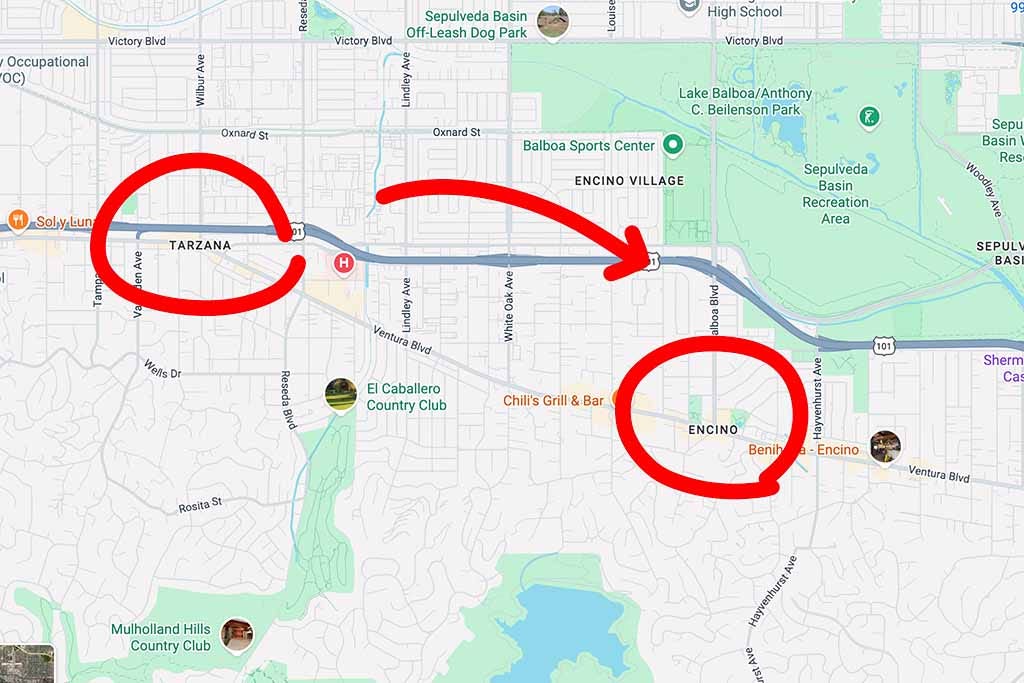
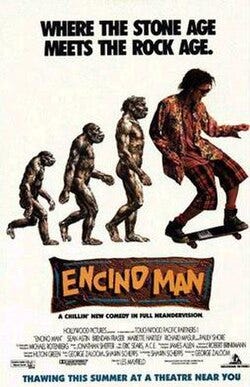
That’s right: Encino Man starring Brendan Fraser (who played George of the Jungle, not Tarzan, by the way). The timeless 90s tale of a caveman who is unearthed in Southern California and enrolled in high school. By the end of the film, despite being actually less evolved, the high schoolers accept the caveman into their community. Encino Man is (accidentally, I presume) the most anti-eugenics film I can think of. And it’s my favorite Pauly Shore movie, too. Five stars.
A Princess of Mars: two stars.
My highly evolved opinion on all of this? You can skip Edgar Rice Burroughs, but definitely watch Encino Man.